The San Jose mayor entered the race pitching himself to voters as the antidote to Sacramento’s dysfunction. His campaign became its own form of turmoil.

San Jose Mayor Matt Mahan pledged to get government “back to basics” under his leadership as a new kind of moderate Democrat. | Source:Justin Sullivan/Getty Images
The turmoil swamped Mahan’s core message — that government could get “back to basics” under a new kind of moderate Democrat — and with it, supporters’ hopes that the 43-year-old former tech executive could pull California, and perhaps even the national party, back toward a politics focused on competence and kitchen-table concerns.
The chaos was immediately apparent to those who experienced it.
“The campaign was extremely toxic,” one person with direct knowledge said. “Matt Mahan allowed there to be factions and dissension and ratfucking going on, and he did nothing to stop it.”
Another called the campaign “the biggest trainwreck I’ve ever seen.”
Eric Jaye, who served as Mahan’s top strategist before his firing two months before Election Day(opens in new tab), called it a “missed opportunity to elevate a young leader … who many thought could be a fearless change agent not just in California, but a leader who could help recenter the Democratic Party nationally.”
Mahan did not respond to requests for comment.
The mayor’s loyalists point out that he entered the race as a virtual unknown outside Silicon Valley, polling in the low single digits in a field that included former Health and Human Services Secretary Xavier Becerra, former Rep. Katie Porter, and billionaire Tom Steyer — who spent more than $200 million(opens in new tab) on his own campaign. By their telling, Mahan was making real progress before the money ran out.
“We were moving,” one person said. “We went from 3% to 10%(opens in new tab), and we were matching it with good earnings.”
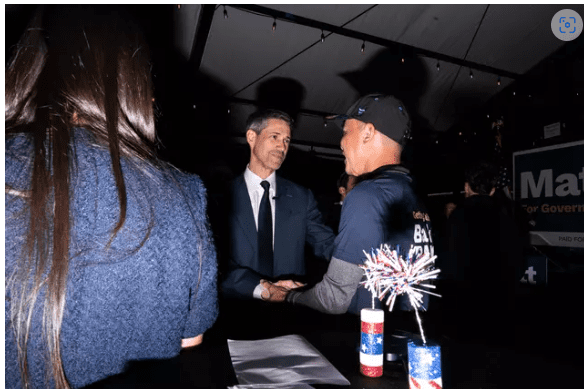
Mahan shakes hands with supporters at his campaign party in San Jose after conceding. | Source:Pablo Unzueta for The Standard
Late to the game
Mahan had seemed, to many, like exactly the kind of Democrat needed in California. He had built a reputation as a pragmatic problem-solver as mayor of California’s third-largest city — tackling homelessness with a tough-love approach that won praise from moderates and business interests. His housing reforms made him a favorite of YIMBYs and others trying to address the state’s crippling shortage. In Silicon Valley circles, where frustration with Sacramento’s deference to unions had been building for years, Mahan represented something rare: a centrist, business-friendly Democrat, who would be an ally in their ongoing war with the state’s powerful labor groups.
Among those who spent big supporting Mahan’s bid — either directly to his campaign, via political action committees, or both — was a long list of billionaires: venture capitalist and Standard chairman Michael Moritz, Google cofounder Sergey Brin, Netflix cofounder Reed Hastings, real estate developer Rick Caruso, Palantir cofounder Joe Lonsdale, LinkedIn cofounder Reid Hoffman, and Stripe CEO Patrick Collison.
Many of Mahan’s billionaire supporters are Democratic megadonors, including Moritz, Hastings, and Hoffman, and have dropped millions of dollars in recent years to prop up Democratic candidates(opens in new tab) and block President Donald Trump’s agenda(opens in new tab). Others who contributed to his bid have aligned themselves with the MAGA movement, including Brin(opens in new tab) and Lonsdale — which scared off some would-be supporters of Mahan.
The threat of the California Billionaire Tax passing in November galvanized many of Mahan’s supporters into getting more involved in primary races at the local and statewide level, where they saw windows of opportunity with certain candidates to push the state toward the political center.
But their endorsements — and the tens of millions that came with the support — did little to rectify the missteps made in Mahan’s campaign.
The near-unanimous view among those who spoke to The Standard is that Mahan’s most consequential error was waiting until January to join the race, months after a crowded field of fellow Democrats had begun fundraising and scooping up endorsements from powerful interest groups and political figures. That left little time for Mahan to introduce himself to voters outside his Silicon Valley base and build the statewide coalition he needed to win.
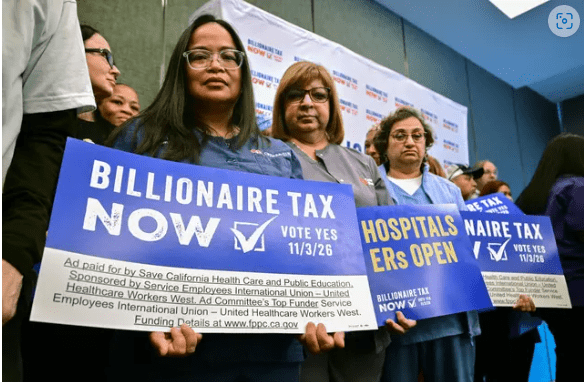
The proposed Billionaire Tax has galvanized wealthy Californians into getting more politically involved. | Source:Frederic Brown/AFP/Getty Images
Much of the initial round of endorsements in the governor’s race went to former East Bay Rep. Eric Swalwell, who was leading(opens in new tab) Democrats by the time Mahan entered the competition. When Swalwell’s run imploded in April amid sexual assault allegations,(opens in new tab) his endorsements — from labor unions to healthcare groups and state and congressional lawmakers — scattered to Becerra, Steyer, and Porter.
“Labor was ‘anybody but [Mahan],’” said Andrew Acosta, a Democratic consultant based in Sacramento. “That message was directed across most of the groups here.”
Mahan’s tough relationship with unions — thanks to his business-friendly policies — wasn’t the only problem. He initially caught media attention for criticizing termed-out Gov. Gavin Newsom for a focus on petty antics like his social media war with Trump and not on solving the state’s many crises. That, combined with the perception that he was aligned with the tech world, made him persona non grata in Sacramento, sources said.
I have promoted all the Democratic candidates at one point or another, except Mahan,” California Federation of Labor Unions President Lorena Gonzalez wrote in an April 28 social media post(opens in new tab). “We are opposed to the candidate funded by Trump’s big tech billionaires. And the Republicans.”
Acosta said Capitol insiders were spooked by Swalwell’s collapse and afraid to make another wrong endorsement. That cautious approach eventually cleared the way for Becerra, a former state attorney general, congressman, and Assembly member, to take the lead. It was a stunning turnaround for Becerra, who had consistently polled in the single digits before Swalwell’s downfall. And though Becerra’s campaign and the independent committees backing his bid raised less than Mahan’s backers did, Sacramento insiders and special interests considered him the “safe” bet and threw their support behind him.
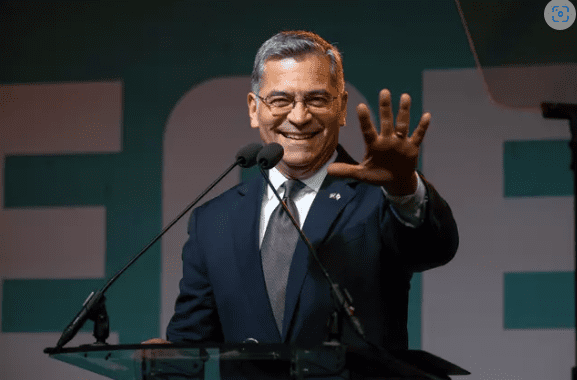
Sacramento insiders and special interests considered former Health and Human Services Secretary Xavier Becerra the “safe” bet and threw their support behind him. | Source:David Crane/LA Daily News/Getty Images
“I think at that point people were very afraid of making a mistake,” Acosta said. “People were very wary of jumping into the wrong campaign and having it be a problem for them.”
Was there a donor problem?
The late start created another immediate issue for Team Mahan: money. With no time to build grassroots support, the campaign was consumed from the start by the demands of fundraising.
“It was a fundraising-first campaign,” one person noted. “Everything took a backseat to fundraising.”
Mahan’s campaign raised roughly $15 million(opens in new tab) through mid-May, according to state campaign finance records, though about $5 million was earmarked for the general election, insiders said. The main independent committee supporting his bid, called “Back to Basics,” raised another $28 million,(opens in new tab) while a second raised roughly $3 million(opens in new tab). The efforts fell far short of what Mahan and his supporters had hoped to raise by tens of millions of dollars(opens in new tab).
“The [PAC backing Mahan] didn’t get the money they needed. The campaign didn’t get the money they needed,” the source said.
“The money — it’s not that it stopped, but it stopped enough,” another person said.
The fundraising sprint created a punishing cycle. Money came in, was spent early on broadcast and digital advertising(opens in new tab) — before most voters were paying attention closer to the end of the race — then dried up precisely when it was needed most. According to Jaye, the campaign was “forced to ‘go dark’ three weeks before the election when their gambit to attract more tech donors failed.”
One prominent supporter said the money, or lack of it, made a big difference.
“You don’t go to war without enough ammunition to fight the war,” that person said.
Mahan’s backstory — a poor kid from Watsonville who became a Harvard graduate — was his greatest selling point. If his campaign had raised another $10 million to $15 million to share that story, “we would be having a very different conversation,” the supporter said.
The fundraising obsession pulled the campaign increasingly toward Silicon Valley’s wealthiest — and in doing so, sources say, made it increasingly difficult to shed the perception that Mahan was the candidate of the elite, not that of working-class Californians.
Jaye was blunt about what that influence meant in practice.
“After the campaign was taken over by donors, the political consultant cartel, and young staffers, it was attempting to walk a tightrope between pleasing billionaire benefactors without also displeasing entrenched Sacramento interest groups,” he said. “It is predictable they tumbled to earth.”
The internal collapse
While the donor problem shaped the campaign’s strategy, a parallel crisis was unfolding inside it.
At the center of the dysfunction, sources said, was Jaye’s firing, which was prompted by feuding with other top staffers over fundraising and voter outreach strategy.
One source close to the campaign said Jaye was too focused on building a voter base in areas where donations were strongest, which limited the campaign to wealthy pockets of California — mainly in Silicon Valley — and prevented Mahan from building name recognition in other areas where his ideas were popular, like Orange County and suburban, moderate parts of the state. Jaye had also disagreed with donor pressure to spend campaign cash quickly, arguing that Mahan needed to flood the zone once voters had their ballots in hand.
But the turmoil didn’t end with Jaye’s exit. Ongoing friction between Adrian Rafizadeh, Mahan’s 24-year-old campaign manager, and Tasha Dean, his 28-year-old spokesperson, splintered the campaign staff into competing factions.
Rafizadeh, a former Republican who ran Mahan’s successful 2022 mayoral bid, was accused by critics of being out of his depth on a statewide race and fixated on fundraising at the expense of strategy.
“Adrian lost the locker room,” one source said.
Rafizadeh’s supporters defended him as a young but brilliant strategist who managed the nearly impossible task of standing up a statewide campaign four months before an election — while fending off attacks from the inside.
“You had people gunning for Adrian from day one,” one source with direct knowledge of the campaign said. “Matt Mahan knew the staff was cutting up Adrian and did nothing to stop it.”
Rafizadeh and Dean declined to comment about the alleged feuding, but both provided statements celebrating their time on the campaign.
“I’m incredibly proud of the campaign we built and the candidate we built it for, because Matt Mahan ran on a simple promise to make government work for everyday Californians and never wavered from it for a single moment,” Rafizadeh said. “I’ll always be grateful to the exceptional team that poured their hearts into this fight.”
“Working for Matt Mahan is a privilege. He brought the same focus on results and refusal to accept the status quo to this campaign that he brings to City Hall,” Dean said.
Others cast blame on campaign chair Joe Green, Mahan’s friend from Harvard, saying he ran the operation like a tech startup — focused on fundraising metrics rather than votes. Green declined to comment.
But one source defended the fundraising strategy, arguing that “money is the lifeblood of a campaign,” and without it, Mahan couldn’t compete.
“You end up in this kind of loop where we raised a bunch of initial money, but then people were like, ‘Why aren’t you rising in the polls?’ Then people start worrying about your progress,” the source said.
Mahan’s supporters refuted the idea that the campaign was more chaotic than usual — or that his poor showing in the primary was for nothing.
“It wasn’t even building the plane as we were flying it. It was getting the parts to build the plane as we were flying it,” one source said, explaining how quickly the team had to move given the short timeline. “Campaigns can be like a snowball. If there is something that was awry at the beginning, it does become hard to course correct. Once the right team was in place, the thing did stabilize.”
No one articulated the campaign’s failure — or its stakes — more sharply than its fired manager, Jaye.
“Crushing defeats can teach hard lessons,” he said. “I hope the lesson Mahan takes away from this is that the next time he runs for office, if there is a next time, he surrounds himself with people who believe in his mission and he stays true to it himself. He should welcome support from all corners, but that support should never come at the cost of his own voice.”
What’s next for Mahan?
Whether Mahan’s political career survives the loss remains an open question, though he recently said he plans to run for a third term as San Jose mayor in 2028(opens in new tab).
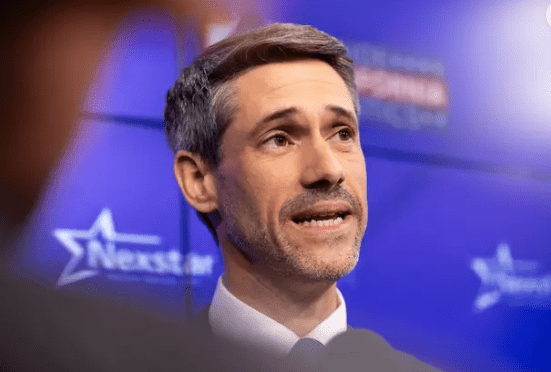
Mahan’s supporters refute the idea that the campaign was more chaotic than usual — or that his poor showing in the primary was for nothing. | Source:Benjamin Fanjoy/Getty Images
Sam Singer, a San Francisco public relations expert, offered the most forward-looking appraisal.
“Ugly finish, good start,” Singer said. “If he learns from his errors, he’ll do better and get closer. Whether it’s the second or third time, he’ll get the brass ring.”
Dan Newman, a Democratic campaign consultant, agreed that Mahan’s failed gubernatorial bid doesn’t automatically disqualify him from higher office.
“It never helps to underwhelm in terms of results from a well-funded campaign that finished with 3.5% of the vote,” Newman said. “But he also impressed some people who paid attention and saw that he’s got some clear talents and skills.”
Others remain concerned that Mahan’s “tech bro” reputation, once hardened, will be difficult to shake.
“It’s difficult to see a lane for him in Democratic politics because of the perception that he is anti-labor and linked to Trump donors,” Democratic strategist Steve Maviglio said. “If he can shed that image, he has a bright future. But that’s a stain not easily removed.”