
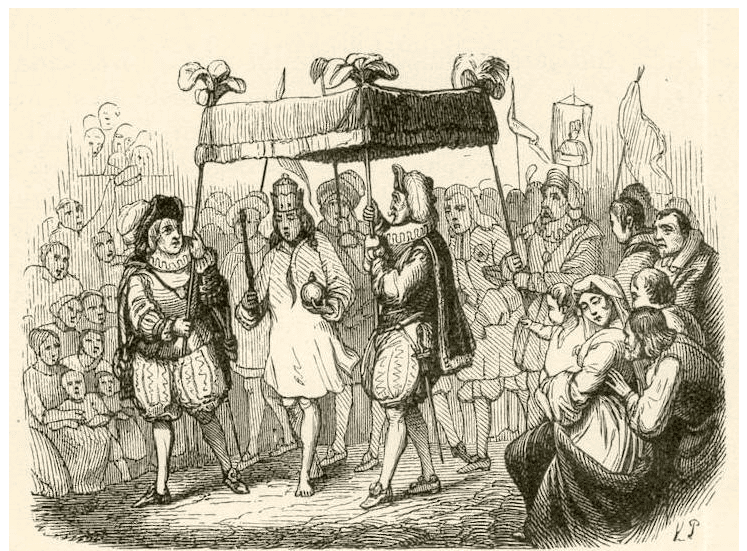
Photo by By Vilhelm Pedersen (1820 – 1859) – English Wikipedia (Wikimedia), Public Domain, Link
The Emperor’s New Clothes dramatizes how easy it is to stay silent about–and remain complicit in–corruption.
This is what the slope looks like.
The admonition to “beware slippery slopes” provides a useful reminder: A compromise here, a cut corner there, a little fib on the weekend can lead to ethically-compromised behavior down the line.
The pro-Measure A campaign in Santa Clara County is proving the admonition correct–decisively so. It’s not simply their advocates’ transparent misdirections and patronising double-speak. And it’s not just the lying progressive leaders–though that’s bad enough in itself. And it’s not even the brazen misuse of government resources to shill for A–though the county sure has hit a new low with that one.
It’s how they all work together systemically to degrade our local political discourse. And–in the process–steer many of our progressive neighbors into such ethically dubious patterns of thought and behavior that they become unable–or unwilling–to call out the naked fabrications of their leaders.
This weekend, some academics and scholars explain how political communities become unethical, and how to find our way back to a smart, fair, and more uplifting local civic dialogue.
Their conclusions:
- Political activity can compel people to focus their efforts not on policy, but on punitive behavior towards the “outgroup.”
- Unethical leaders rely on complicit enablers in their support networks.
- Fierce partisanship often leads to a “win-at-all-costs” mindset which sidelines ethical considerations.
And experts agree: the road back towards fair-minded, moderate, inclusive politics begins not simply with foot-stomping about bad campaign behavior (though that’s important), but with an unyielding community-wide insistence–from all sides–on honesty, respect, and intellectual integrity from our political leaders.