

7 Pickups and SUVs Bucking the Trend
Despite a soft overall market, these older trucks and SUVs are climbing in value. Several of these utilitarian rigs had already become bonafide collector vehicles — and they are only getting hotter.
7 Pickups and SUVs Climbing the Market
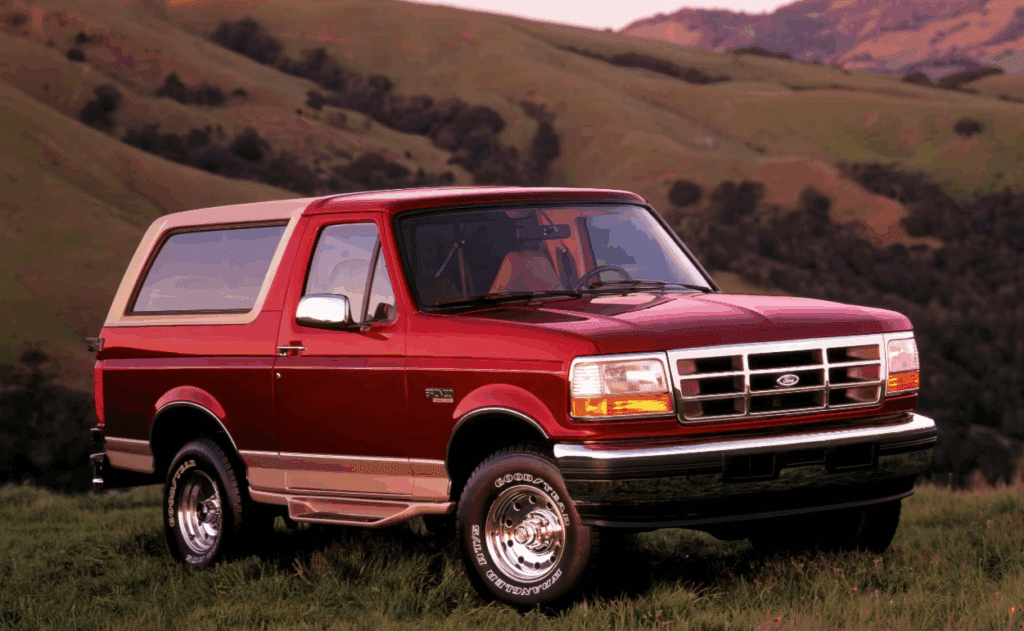
1996 Ford Bronco Eddie Bauer Photo by Ford
We’re always going to advocate for having a pickup or 4×4 in the vehicular rotation. Whether for work or play, the utility, off-road performance, and simplicity of a vintage hauler help make them a reliable beast of burden. Once you add one to your stable, you’ll be looking for excuses to get it dirty.
There is some bad news, however. The truth of how fun these vintage workhorses can be hasn’t been a well-kept secret. The following seven 4x4s have seen their #2 (excellent) values climb by at least 10% in the last few months, and many of them have been on the rise for much longer.
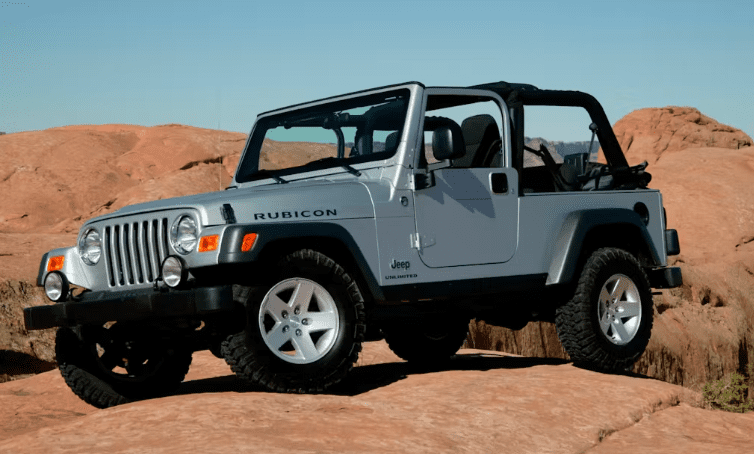
Average #2 Value: $24,072, up 10%
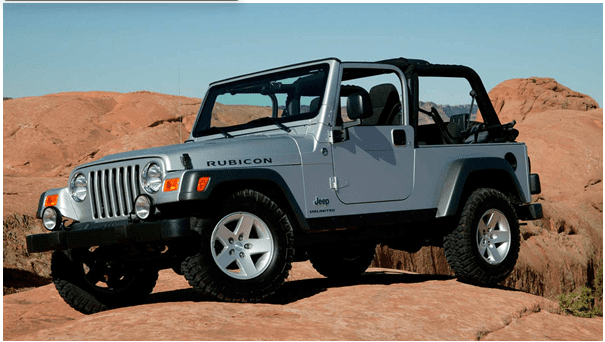
What can we say about the TJ Wrangler that we haven’t already said? Off-road performance and ride quality were both improved by adopting the four-link front and rear suspension of the unibody Grand Cherokee into the compact and tough body-on-frame Wrangler. On the outside, however, the dimensions and overall looks were a throwback to the CJ-7, thanks to a return to round headlights. Adding the low-crawl-ratio transfer case and selectable lockers front and rear created the Rubicon, a cornerstone of the Wrangler lineup to this day. Likewise, the TJ gave us the first Unlimited model, although the added wheelbase didn’t include an extra set of doors. All of that came with the last iteration of the venerable and nearly indestructible AMC 4.0-liter inline-six.
Combine the Rubicon package with the Wrangler Unlimited for a longer wheelbase and increased cargo capacity and you’ve got the Holy Grail of TJs. Add the six-speed manual transmission and you’ve practically got a unicorn. Expect to pay quite a bit more for that rare and desirable combo.
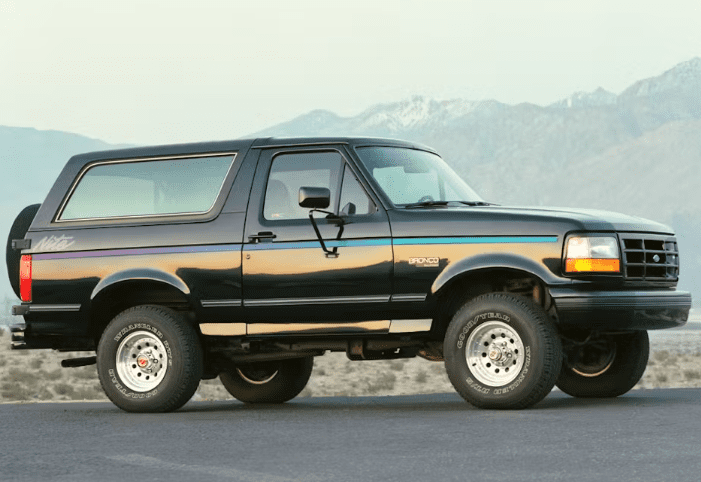
Average #2 Value: $41,746, up 10%
The final full-size Ford Bronco was an evolution of the basic body structure and chassis that was first introduced in 1980, which is fine by us; there wasn’t much reason for a full redesign. We could be persuaded to agree that the 1980–86 or 1987–91 Broncos are equally as handsome as the 1992–96 models, but the latter two generations featured some of the best powertrains that were offered, with the final generation eventually ditching the big inline-six and leaving only 302 and 351 Windsor V-8 power.
It’s no surprise that a last-of-its-kind model has a loyal following, as these big two-door Broncos are a great combination of flexible seating for four with enclosed cargo room while also keeping a tidy wheelbase for maneuverability—a trait that’s handy for getting around in a city or on a trail.
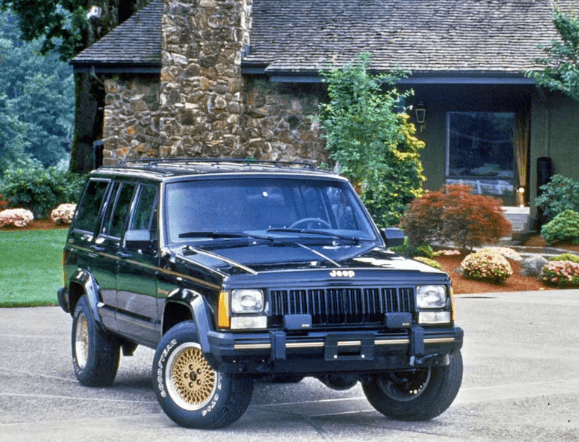
Average #2 Value: $20,694, up 12%
The four-link front suspension that made the TJ Wrangler so much better on-road and off was first installed on the long-running XJ Jeep Cherokee. Downsized from the body-on-frame Cherokee that served as a lower-priced entry-level version of the full-size Wagoneer, the unibody XJ was initially supposed to be supplanted by the Grand Cherokee. Instead, it was given a refresh for 1997 and soldiered on.
Our ideal XJ would be one of the later versions powered by the same 4.0-liter AMC inline-six found in the Wrangler. While the refreshed Cherokees do have wheel openings that make fitting larger tires a bit more of a chore, the new interior, OBD II electronics, and improved weather sealing all combine to make them a more enjoyable daily driver. Those looking for one as a weekend off-roader might prefer an early model for some of those very same reasons, as earlier versions make it easier to modify the engine for more power.
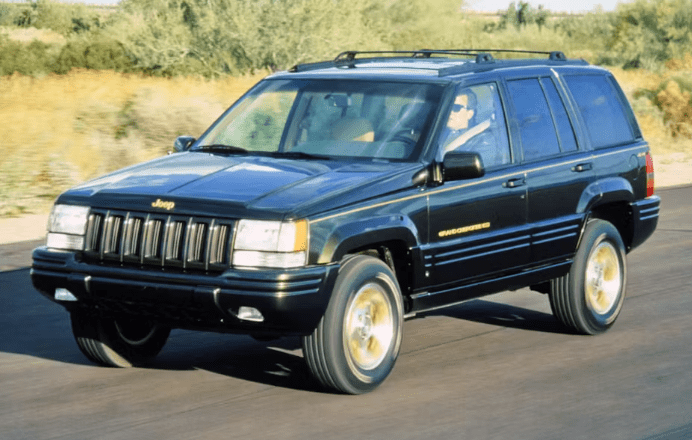
Average #2 Value: $15,725, up 15%
Jeep had a certified hit on its hands with the Cherokee, but soon after its launch, AMC started working on its planned replacement. By 1989, a concept emerged for what would become the ZJ Grand Cherokee. Like the XJ, the new Grand Cherokee would be built on a unibody platform with a four-link front suspension; however, it would be larger, ditching the AMC four-cylinder base engine and offering V-8 engine options instead. Further, it would skip the leaf springs, opting instead for a four-link rear suspension that improved ride quality while keeping plenty of articulation. The Grand Cherokee allowed Jeep to once again offer a more upmarket 4×4, as it had with the full-size Grand Wagoneer. The Limited, available on the ZJ for 1998 only, brought the 5.9-liter Magnum V-8, a hint at the future of performance SUVs. The bigger V-8 helps make the Limited the most desirable of all ZJs.
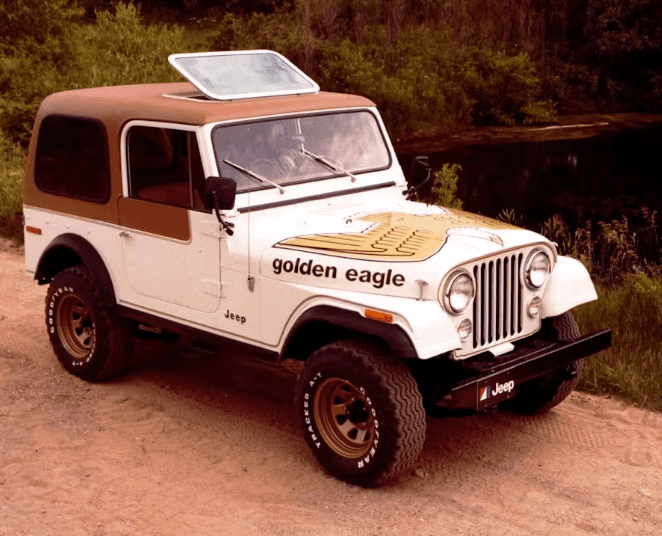
Average #2 Value: $38,339, up 12%
As soon as it hit the market, it was apparent that the general public was ready for a nimble 4×4, and Jeep was ready to sell them a version of the quarter-ton runabout that helped the Allies win WWII. It took several iterations, growing a bit each time, before Jeep landed on the perfect compromise of length and wheelbase that afforded drivers enough room to be comfortable while keeping the turning radius tight for difficult trails. The CJ-7 proved to be just the right compromise and the same basic size lasted through the Jeep brand’s sale to Chrysler, and the CJ evolved into the YJ and eventually TJ Wrangler.
We love a big, contrasting hood decal, so our go-to CJ-7 would have to be a 1977–80 Golden Eagle. Powered by an AMC 304 V-8, it would have a great soundtrack, even if it was down a bit on power compared to the later 4.0-liter AMC powerplants we’ve been discussing. Still, it’s nothing that a bit of hot-rodding can’t fix. Throw in a Levis interior and you’ve got the most ’70s of Jeep CJs that would look great in any collection.
1968–83 Toyota Land Cruiser FJ40
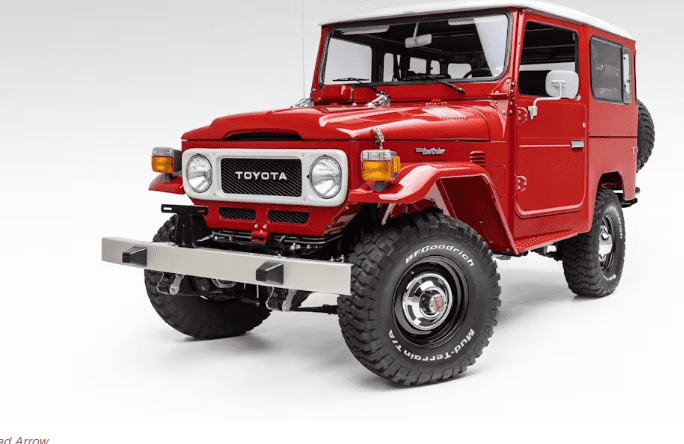
Average #2 Value: $52,821, up 12%
Along with the first-gen Ford Bronco, Toyota FJs were among the first vintage SUVs to become desirable collectibles. The fact that they weren’t available in as great a number as their Ford 4×4 counterpart also helped make them a hot commodity. Although they originally came with a Toyota version of GM’s robust Stovebolt inline-six, it’s not uncommon to see one swapped with a Chevy V-8. Several companies offer completely refurbished restomod versions that have helped them attract the attention of a whole new audience. Many of those restomods also feature a Chevy V-8 swap, usually a more modern variant.
We noted about six years ago that FJ40 values were down. While they’ve had a few minor ups and downs since then, their recent climb, reflected in later models in particular, shows they’ve sprung back and then some.
1987–91 Ford F-Series
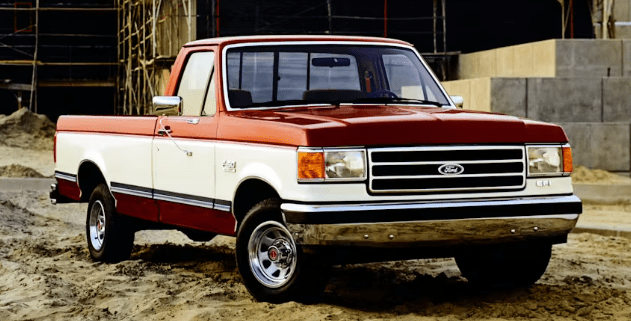
Average #2 Value: $29,236, up 17%
Like its Bronco counterpart, the 1987–91 Ford F-Series pickup featured a clean, elegant design that has aged quite well. The light-duty F-150s were available with Ford’s bulletproof 300-cubic-inch inline-six, but most were powered by Windsor V-8s. Opt for the 3/4-ton F-250, and you were also given the choice of the venerable 460 V-8 or International’s indirect-injection V-8 diesel, first in 6.9-liter guise before the 7.3-liter version replaced it.
If we were in the market, we’d take a 302-powered, extended-cab F-150 4×4 in one of the many two-tone paint schemes available. They’re a quintessentially ’80s pickup, and their rugged simplicity makes them a great choice for a workhorse or for weekend getaways that head off pavement. Due to their popularity, these trucks are easy to keep on the road and even have plenty of restoration parts available in the aftermarket.